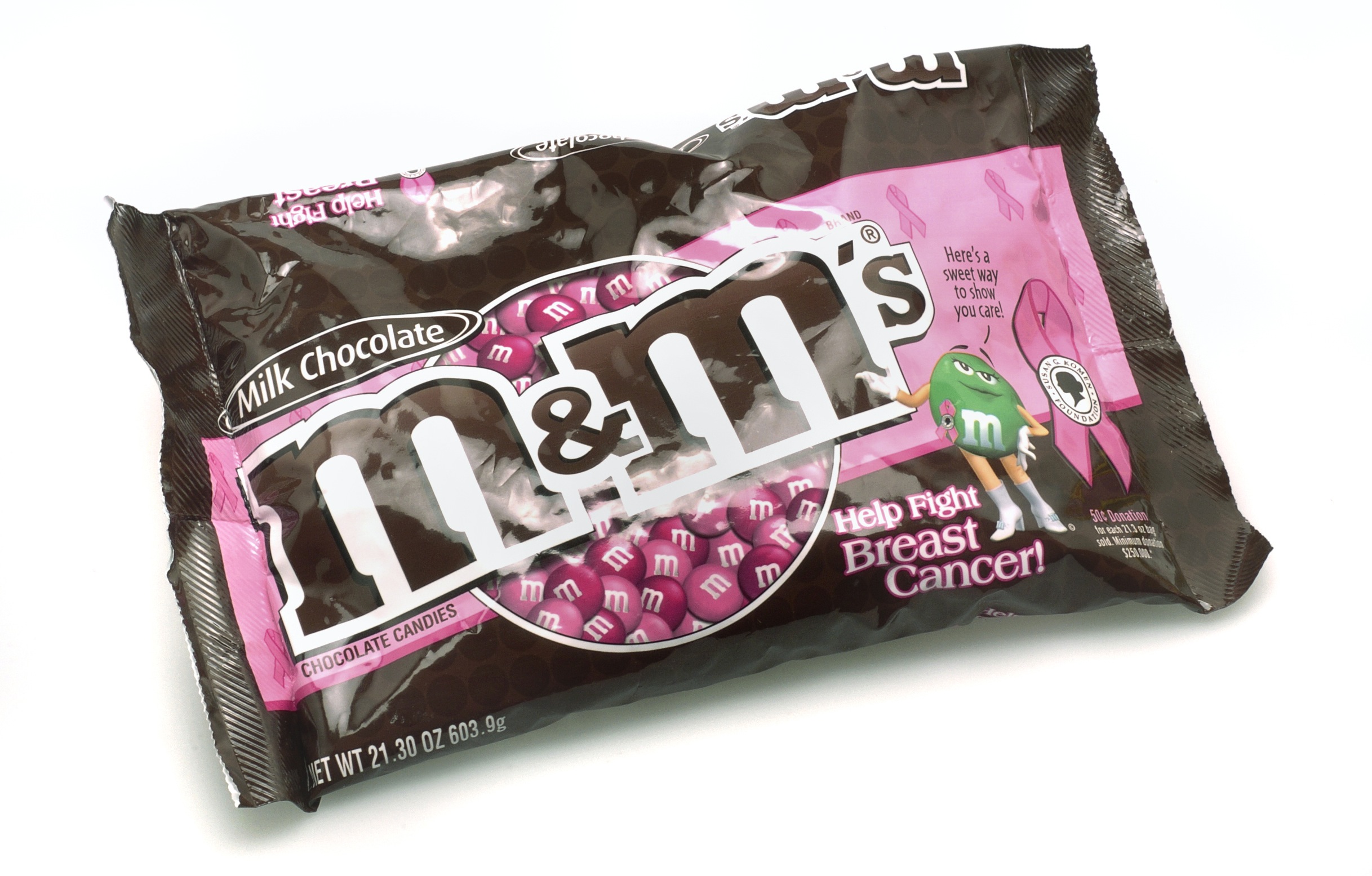
To many women with breast cancer, Breast Cancer Awareness Month is about the evils of pink.
From soup cans to Mustangs, many corporations saturate their products in pink during Breast Cancer Awareness month. These corporations’ incentives, many breast cancer advocates warn, however, may not be as good-hearted as they appear.
This advertising technique, called cause marketing, is a marketing strategy where charity is used to increase profits. Research from Cone Communications, a Boston consultancy, found that 79 percent of consumers would likely switch to a brand that supports a cause, all other things being equal.
“This is nuts,” breast-cancer patient, Jeanne Sather, 54, said. “Companies will take out an advertisement in a major magazine to tell you about their great donation, and the ad might cost more than the donation,” Sather said. “This is fairly typical.”
Sather said cause marketing exploits women who have breast cancer. Sather said she urges women to boycott any product that displays a pink ribbon on it. Her Seattle-based blog, The Assertive Patient, features her “Boycott October” campaign where she recommends that people stop buying pink ribbon products.
Many organizations are producing “pink products,” with promises to donate part of the item’s proceeds towards a breast cancer foundation. Angela Wall, the editor of Breast Cancer Action said consumers need to be aware that the portion of the product’s profit that the corporation donates is often very slim. Many corporations have a donation maximum that puts a cap on the money raised at a certain point. The money raised after this point goes to the corporation, rather than the charity.
While some companies are required to inform consumers of their maximum, many corporations found loopholes, enabling them to pocket the excess charity money.
New Balance reached its $1 million per year maximum over the past two years. The company is partnered with the Susan G. Komen foundation, who insist its corporate partners inform consumers when they have reached their donation maximum. However, New Balance said in a statement that it does not inform their consumers after they have reached the cap.
Despite mislead customers, many companies claim cause marketing triggers awareness. Last month, the Pink Ribbon Produce campaign used in-store promotions to drive breast-cancer awareness through produce at participating stores. The participating stores were decorated with a pink ribbon indicator.
Not everyone, however, says generating awareness is enough support.
“Awareness is over-rated,” Sather said. “This is the fall-back position these organizations and companies take when they can’t defend their positions.”
If shopping could cure cancer it would be cured by now. We don’t need more awareness; we need action to stop the causes of breast disease.
“If shopping could cure cancer it would be cured by now,” Wall said. “We don’t need more awareness; we need action to stop the causes of breast disease. Awareness is not the same as working to end the epidemic.”
The “watchdogs of the breast cancer movement,” as the BCA call themselves, formed Think Before You Pink, a project designed in response to the growing concern about the number of pink ribbon products on the market. The campaign encourages people to ask “critical questions about pink ribbon promotions” and calls for more transparency and accountability by companies that take part in breast cancer fundraising.
According to Think Before You Pink, many companies raising breast cancer funds also make products known to cause breast cancer.
Yoplait’s pink-lidded yogurt, which was marketed to help raise money for breast cancer, was once made with dairy stimulated with the hormone rBGH. This is an artificial hormone that is given to cows and is linked to breast cancer and other health problems. Following the public’s demand, General Mills stopped putting rBGH in Yoplait yogurt. One-third of the dairy companies are still using the artificial hormone to stimulate milk production, Wall said.
The American Cancer Society held the Making Strides Against Breast Cancer Walk Oct. 8 between Lawrence Avenue and the Lakefront. State-wide, the walk’s total is so far nearing $2 million.
Dana Morris, the Chicago Walk Manager, said the ACA has a list of criteria the companies that sponsor the walk must have. DePaul University’s softball team has formed a team for the event.
“Ninety-six cents of every dollar raised goes towards our mission of breast cancer research, education, advocacy and services for patients and their families,” Mills said. “All of the money that is raised in Illinois stays in Illinois.”
“People should be very cautious,” Wall said. “When you purchase a product that claims to be ‘for breast cancer,’ be aware of where the money is really going, who it is helping, and who the real beneficiaries are.”
An estimated 240,000 women are diagnosed with breast cancer every year.
“Please remember, breast cancer is a disease–not a marketing opportunity,” Sather said.
—
This article was originally posted October 26, 2009 in the DePaulia.


Leave a Reply to shrubs and bushes Cancel reply