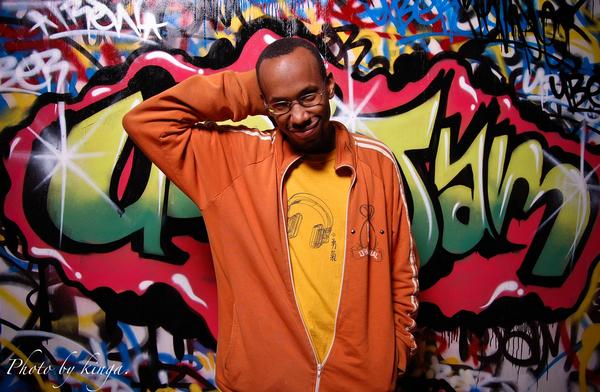
Exploring the world of underground hip-hop has recently been given a new angle: one that is 24 stories above the downtown streets of Chicago. Setting in motion a documentary entitled, Rooftop Hip-Hop, nine MC’s spit out freestyle raps as they stand atop city skyscrapers in a wind-blown flow of freefalling words.
The producers attempted to clean away the violence, money and sexualized women that have bled for years over hip-hop stereotypes.
“We tried to make it one-of-a-kind by breaking the stereotypes of hip-hop and giving another face to it,” said Moriarity. “Some of the artists in the film are going for their Masters or Doctorates,” he added proudly.
The lyrical content in the film isn’t about your typical hoes and bros. That is, unless you are referring to dwarfs and evil queens from eighties flicks.
“The lyrics are dorky,” said Moriarity when speaking about “Worst Nightmare,” a song performed in the documentary. “Phillipe Morris made references to Willow, the Architect in the Matrix, and breaking out of an insane asylum to speak out against the government,” said Moriarity. “This isn’t the ‘gangsta’ music about shooting people and exploiting women that most people associate hip-hop with.”
While the artists featured in the film do not embed themes of violence, sex, or money within their lyrics, many songs that are played in the mainstream media today do.
Producer Oliver Holmberg finds blame what he referred to as “the corporate machine.” Record labels’ inability to work with one another and collaborate amongst the artists, producers, and booking agents has made it difficult for a more intelligent-based hip-hop to gain popularity, said producer Oliver Holmberg. “We wanted to test this and to see if we could turn this around.”
“Sure enough, we booked a venue and were able to sell 100 tickets,” said Holmberg. “We found that collaboration was the biggest problem we could find.”
Glimpses of freestyle sessions, as well as a concert the artists performed at are entwined with up-close interviews of the artists, fashioning the documentary to be what producer Paul Moriarity described as a, “musical-urban drama.”
“The musical-urban drama aspect arises within Rooftop Hip-Hop because it looks at how hip-hop transforms lives,” said Moriarity.
Music video meets informative documentary, Roof Top Hip-Hop is different from other films because “it is an informative music video rather than a straight documentary where they simply present the facts and the producer’s arguments,” said Moriarity with a satisfied smile. “The only other documentaries to have done this aren’t specific to Chicago or are purely based on gangster rap, which our documentary does not do.”
“We are trying to go more in-depth and provide something satisfactory where the audience gets to see and know the artists as well as their abilities,” said Moriarity.
No other documentary before has featured Chicago-based underground MC’s, said Moriarity.
Moriarity said local MC’s isn’t the only aspect that separates Roof Top Hip-Hop from other documentaries of its genre.
“Rooftop Hip-Hop is unique in its way that it is very focused,” said Moriarity. “We’re not really doing a documentary on Chicago hip-hop, but rather are doing a documentary on a specific tight-knit circle of hip-hop artists.”
“It’s a character-based documentary,” said Holmberg, “We are letting the artists tell the stories.”
The skills of these characters impressed producers giving them a new perspective on not only the culture of hip-hop, but the talent behind it as well.
“Since we began I have a much better respect for freestyle. Anyone can sit down and write lyrics, but not everyone can pull it off the top of their head and make it flow,” said Moriarity. “Freestyle hip-hop is like poetry slam. It is being written as the artists are breathing, as they are speaking. It’s totally off the cuff,” and with a pause he added, “It is very much like improvisation, but in musical form.”
Nearly two years have passed since the film began production. Avoiding a third year, the producers said they are working hard to complete it by the end of summer.
“Although I have no history working within the music industry, I was still able to produce a concert,” said Moriarity. When it comes to the artists’ inability to produce concerts, I hate to say it, but there are no more excuses.”
“All of the artists have one common thread of holding a certain level of respect from their peers within the scene and want more than anything to make music their life,” said Holmberg. “However, I wanted a good selection. All of the artists are from different parts of the city, some of their rap is more political, some of it is humorous, and some of it is even a little more commercial.”
“There are ten artists within the documentary,” said Moriarity. Adding with a wink, “Nine of them are hip-hop MC’s, and the tenth is Chicago. Chicago truly sets the scene.”
The train softly hums while the wind whispers into Ang-13’s ear just before she takes a deep breath that ends the moment of soft tranquility. Abruptly springing into a series of bouncy, bubbly, and bold beats into the microphone, she begins to freestyle. She never looks at the microphone, the video cameras, or the other MC’s. Instead, her eyes remain fixated on her bird’s eye view of Millennium Park. The body frame of Chicago’s skyline mirrored onto the bean flashes a golden reflection just as the sun sets out of the city. A dark cover is cast over Chicago and then, the credits roll.


Leave a Reply to Ronny Cancel reply